Best Postureease.tech Alternatives for Better Posture in 2026
The strongest postureease.tech alternatives available in the United States right now are Habit Posture, Upright Go S Lite, ComfyBrace Adjustable Posture Corrector, Forme Power Bra, Power Bra, Alignmed, and Posture Pump. Each takes a different approach, from vibration-based biofeedback sensors to therapeutic spinal decompression, so the right pick depends entirely on how you spend your day and where your posture breaks down first.
Seven options is a lot to sort through. The comparison below cuts straight to what matters: technology type, comfort, price range, and who each device actually suits.
| Product | Technology type | Comfort level | Price range | Best for |
|---|---|---|---|---|
| Habit Posture | Sensor / biofeedback | High | $$ | Professionals and gamers at screens all day |
| Upright Go S Lite | Sensor / biofeedback | High | $$ | Tech-forward users wanting app-tracked progress |
| ComfyBrace Adjustable Posture Corrector | Physical brace | Moderate | $ | Budget-conscious buyers wanting firm shoulder support |
| Power Bra | Sensor + garment | High | $$$ | Women wanting posture correction built into everyday wear |
| Forme Power Bra | Sensor + garment | High | $$$ | Active women prioritizing athletic-style posture support |
| Alignmed | Brace + reminder tech | Moderate | $$$ | Users needing therapeutic-grade spinal alignment support |
| Posture Pump | Mechanical / therapeutic | Moderate | $$$ | People with neck or back pain needing cervical decompression |
All seven products ship to US addresses and are available through major online retailers or their own brand websites. Posture Pump is also stocked by select physical therapy clinics, which matters if you want professional guidance before purchasing.
What sets each postureease.tech alternative apart?
The differences between these devices go well beyond price. Technology type, wear duration, and the specific area of your spine each product targets all shape whether a device will actually work for you.
Habit Posture
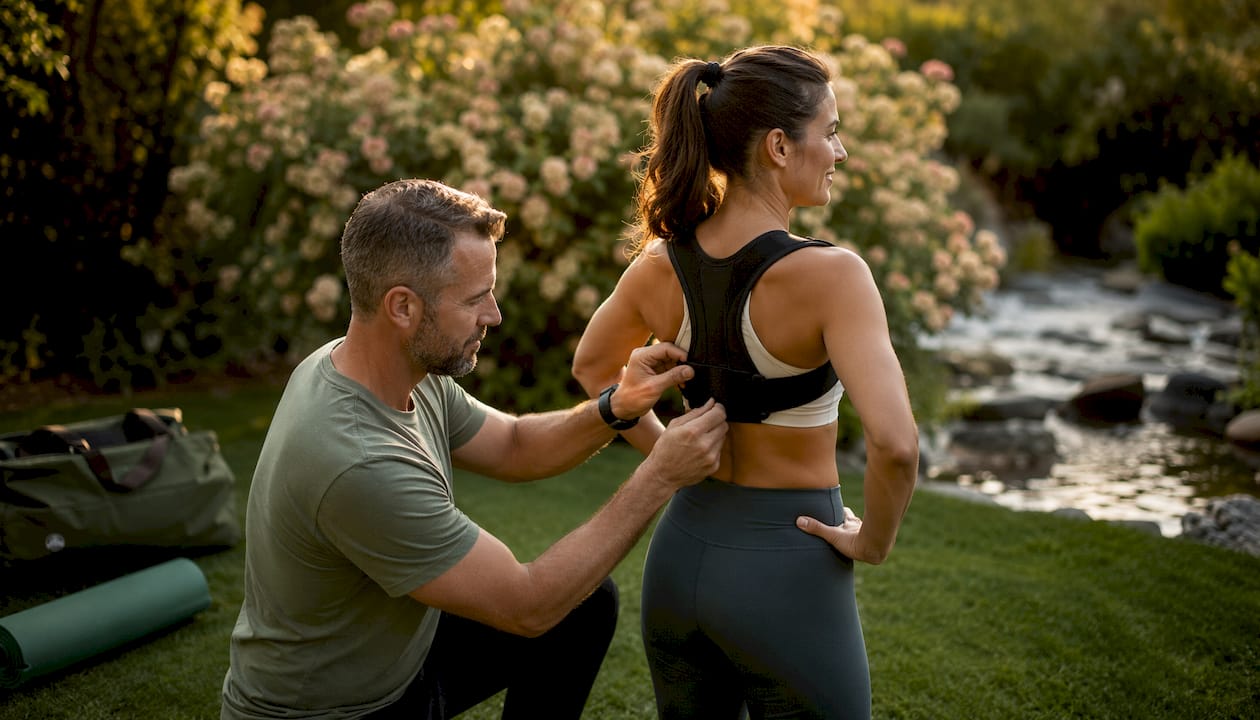
Habit Posture is built specifically for people who spend eight or more hours in front of a screen, whether that’s a gaming setup, a standing desk, or a laptop on the couch. The sensor attaches discreetly to your upper back and connects to a companion app that tracks your posture patterns over time, nudging you with a gentle vibration when you start to slouch. What separates it from generic sensor devices is the coaching layer: the app builds on your daily data to show real progress, not just a buzzing reminder you eventually tune out. For professionals and gamers who want to build a genuine posture habit rather than just wear a corrective device, Habit Posture fits that goal directly.
Upright Go S Lite
The Upright Go S Lite sticks to your upper back with a hypoallergenic adhesive and vibrates the moment your posture drifts. Its companion app logs session data, lets you set training goals, and adjusts vibration sensitivity as your posture improves. Health.com’s testing panel rated it best app-enabled posture corrector among more than 20 options tested. It’s the right pick if you want detailed, week-over-week tracking and don’t mind reapplying adhesive daily.
ComfyBrace Adjustable Posture Corrector
ComfyBrace is a straightforward shoulder and upper back brace with adjustable straps and breathable neoprene. No app, no charging, no learning curve. Health.com named it best overall posture corrector at $27, making it the most accessible entry point on this list. It fits chest sizes from 30 to 43 inches and suits people who want passive support during a specific activity, like a long commute or a focused work block, rather than all-day wear.
Power Bra and Forme Power Bra
Both the Power Bra and Forme Power Bra embed sensor technology directly into a bra garment, so posture correction happens without any separate device to attach or remember. The Power Bra pairs compression with real-time biofeedback, while Forme Power Bra leans into an athletic aesthetic with active-wear materials. Either option suits women who want posture support woven into clothing they already wear, rather than something strapped on top. Forme’s positioning skews toward fitness-oriented users; Power Bra is a broader everyday option.
Alignmed
Alignmed takes a therapeutic approach, using high-quality materials with embedded reminder technology to promote spinal alignment throughout the day. It sits closer to a medical-grade brace than a consumer wearable, which makes it a better fit for users dealing with chronic posture issues or recovering from an injury. The price reflects that positioning.
Posture Pump
Posture Pump is a different category entirely. It’s a mechanical cervical decompression device, not a wearable, designed to relieve neck and back pain by gently stretching the spine. Clinics use it as a therapeutic tool. If your main concern is pain relief from years of forward head posture rather than building a daily correction habit, Posture Pump addresses the root problem in a way no brace or sensor can.
Pros and cons at a glance:
- Habit Posture: Real-time vibration feedback, app coaching, progress tracking. Requires consistent app engagement to get full value.
- Upright Go S Lite: Precise dual-sensor tracking, detailed app data. Daily adhesive reapplication can be inconvenient.
- ComfyBrace: Affordable, no setup required, fits a wide range of body types. Passive support only; no feedback or tracking.
- Power Bra / Forme Power Bra: Discreet, garment-integrated, no extra device to carry. Higher price point; limited to female users.
- Alignmed: Therapeutic-grade materials, technology-assisted reminders. Bulkier than sensor options; less suited to casual daily wear.
- Posture Pump: Clinically effective for cervical decompression and pain relief. Not a wearable; requires dedicated sessions rather than passive use.
Pro Tip: Use a sensor device like Habit Posture or Upright Go S Lite during your work hours, and reserve a physical brace or Posture Pump for targeted recovery sessions. Combining active biofeedback training with passive support at the right moments gets you further than either approach alone.
How to choose the right posture correction device for your needs
Start by identifying where your posture actually breaks down. The most common weak points are the shoulders and upper back, the cervical thoracic junction where the neck meets the upper spine, and the lumbar region. A device that targets the wrong area won’t help much, no matter how well it’s built. If you’re unsure, a single session with a physical therapist can pinpoint your specific alignment issues before you spend money on a device.
Once you know your weak area, match it to the right technology type. Biofeedback sensors are favored in recent research for training conscious motor adjustment, meaning they help your body learn to hold better posture on its own over time. Physical braces offer passive support, which can be useful for short-term awareness but doesn’t build the muscle memory that makes posture stick.
Key criteria to weigh before buying:
- Comfort and breathability: A device you won’t wear consistently is a device that won’t work. Look for breathable materials that don’t cause chafing during extended wear.
- Ease of use: You should be able to put it on, adjust it, and take it off without help. Complexity kills consistency.
- App compatibility: If you want data and progress tracking, choose a sensor device with a well-reviewed companion app.
- Price and total cost: Factor in replacement adhesives, charging cables, or subscription fees beyond the initial purchase.
- Lifestyle fit: A garment-integrated option like Power Bra suits someone who wants posture correction built into their wardrobe. A clip-on sensor suits someone who wants to track data. A brace suits someone who wants simplicity.
Physical therapists recommend wearing posture devices only during targeted, mindful sessions, not all day and never while sleeping. Short, consistent sessions build awareness without creating dependence on the device for support.
Pro Tip: Pair your device with a posture-focused stretching routine targeting the core, upper back, and neck. The device builds awareness; the stretching builds the strength to maintain that awareness when the device comes off.
What types of posture correction devices are there?
Understanding the three main categories helps you cut through marketing language and pick the right tool for your situation.

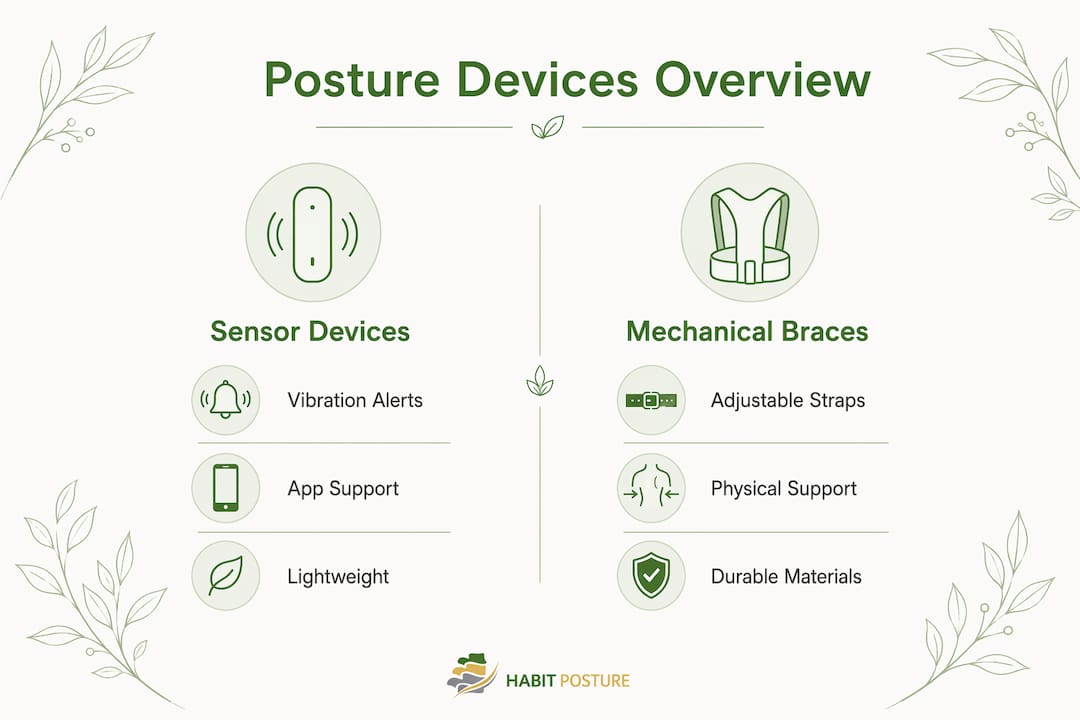
Physical braces use adjustable straps, rods, or panels to mechanically hold your shoulders and spine in a better position. They’re passive, meaning they do the work for you without requiring any engagement from your muscles. That’s useful for short-term awareness training or post-injury support, but physical therapists caution against long-term reliance because the muscles supporting your spine can weaken when they’re not doing their job. ComfyBrace and Alignmed fall into this category.
Wearable sensor devices detect when your posture drifts and send a vibration or app alert to prompt you to correct it yourself. The correction comes from you, not the device, which is why research favors this approach for building lasting posture habits. Habit Posture and Upright Go S Lite are the clearest examples here. Garment-integrated options like Power Bra and Forme Power Bra blend this sensor approach with everyday clothing.
Mechanical therapeutic devices like Posture Pump operate differently from both categories above. They’re not worn during daily activities. Instead, you use them in dedicated sessions to decompress the cervical spine and relieve accumulated tension. They’re closer to a clinical tool than a consumer wearable.
There’s also a fourth category worth knowing: software-based posture reminders. Webcam-based apps use your computer’s camera to monitor your sitting position and alert you when you slouch, with no wearable required. These suit people who spend most of their day at a fixed desk and prefer not to wear anything at all. They don’t build the same tactile awareness as a vibrating sensor, but they cost nothing to try.
Each category suits a different situation:
- Physical braces: short-term awareness, post-injury recovery, passive support during specific tasks
- Sensor wearables: daily habit building, progress tracking, active posture training
- Mechanical devices: chronic neck or back pain, cervical decompression, therapeutic intervention
- Software reminders: desk-bound workers, zero-cost starting point, no wearable preference
What do experts say about posture correction beyond devices?
The most consistent message from physical therapists is that the best posture tool builds awareness rather than forcing a fixed position. Healthy posture is dynamic. Your body needs to move, shift, and adjust throughout the day, not hold one “correct” position for hours. A device that locks you in place, or that you rely on to hold your posture for you, works against that goal.
Expert consensus: Physical therapists recommend posture devices as short-term awareness aids, not permanent supports. The goal is to train your body to self-correct, then phase the device out.
Overusing a brace carries a real risk. When a device does the postural work your muscles should be doing, those muscles get less activation over time. Physical therapists recommend brief, mindful wear durations with active posture training alongside, not instead of, device use.
Research published in the Journal of Behavior Therapy and Experimental Psychiatry found that among 61 people with mild to moderate depression, those who sat upright during stress tests reported lower fatigue and anxiety than those who sat in their usual slouched position. Better posture isn’t just about your back.
Ergonomic lifestyle changes often deliver more durable results than any wearable alone. Adjusting your workstation setup so your screen is at eye level, your feet are flat on the floor, and your chair supports your lumbar curve removes the conditions that cause slouching in the first place. Footwear matters too: shoes that force your feet into unnatural positions shift your entire alignment upward. These changes don’t replace a good posture device, but they make every device more effective.
Movement frequency is the factor most people underestimate. Holding any position for a long time, even a good one, leads to muscle fatigue and eventual slouching. Setting a timer to stand, stretch, or walk for two minutes every 20–30 minutes reduces that fatigue before it starts. A posture-focused exercise program targeting the core, upper back, and neck builds the strength to maintain good alignment without constant reminders.
Pro Tip: Think of your posture device as a coach, not a crutch. Use it to build awareness during the hours you’re most likely to slouch, then do five minutes of upper back and neck stretching at the end of your session. That combination builds the habit faster than device wear alone.
Habitposture fits where other devices fall short
If you’ve read through the comparisons above and you’re still not sure which direction to go, Habitposture is worth a closer look, especially if you spend most of your day at a screen and want something that works with your routine rather than adding to it.
Habitposture is built for real-life screen time: long work sessions, gaming marathons, back-to-back video calls. The gear is designed to slip on without fuss, deliver clear feedback, and help your body relearn what good posture actually feels like, without the bulk of a medical brace or the guilt of another wellness product you never use. No complicated setup. No all-day wear required. Just consistent, practical support that fits the way you actually live.
If you’re also thinking about your workspace setup alongside your device choice, the posture and workplace productivity guide on the Habitposture blog covers ergonomic adjustments that make any posture tool more effective. Posture is a habit. Habitposture helps you build it.
Explore Habitposture
Key Takeaways
The most effective posture correction approach in 2026 combines a biofeedback sensor device with active muscle strengthening and ergonomic workspace adjustments, rather than relying on any single tool alone.
| Point | Details |
|---|---|
| Sensor devices outperform passive braces | Biofeedback wearables train your body to self-correct; braces do the work for you and can weaken supporting muscles over time. |
| Short, focused sessions work best | Physical therapists recommend targeted wear, not all-day use, to build awareness without creating muscle dependence. |
| Ergonomics amplify every device | Workstation setup and footwear changes deliver more durable posture benefits when combined with a wearable tool. |
| Match device to your weak area | Shoulder, cervical, and lumbar issues each call for different device types; a physical therapist can confirm your specific needs. |
| Habitposture suits screen-heavy lifestyles | For professionals and gamers logging long hours at a screen, Habitposture’s sensor coaching system is built for that exact use case. |